 admin
admin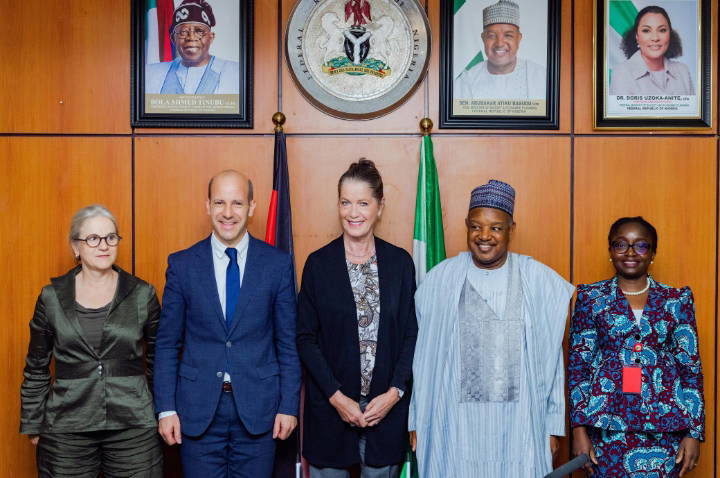
Nigeria and Germany are seeking to deepen economic cooperation and expand investment opportunities, with the Federal Government pledging to turn existing bilateral agreements into tangible economic benefits.
The Minister of Budget and Economic Planning, Senator Abubakar Atiku Bagudu, gave the assurance in Abuja during a meeting with the German Ambassador to Nigeria, Stefan Rößel, who paid him a courtesy visit.
Bagudu said Nigeria was committed to strengthening its longstanding relationship with Germany, particularly in investment promotion, energy cooperation and the implementation of existing agreements.
He acknowledged Germany’s support for Nigeria’s economic reform programme, noting that international partnerships had played a role in supporting the country’s reform efforts. He also highlighted previous engagements involving Germany and other development partners, including the World Bank, the International Monetary Fund and the European Union.
The minister further recalled discussions on energy cooperation during high-level engagements between both countries, saying the relationship presented opportunities to attract investment and strengthen Nigeria’s productive capacity.
According to reports of the meeting, discussions included arrangements involving €25 million and a €300 million export credit guarantee framework. Germany’s official export credit agency had previously confirmed the €300 million framework, which is designed to facilitate eligible transactions involving German exports. The precise status and nature of the separate €25 million arrangement require further clarification.
Bagudu assured the German delegation that his ministry would continue working with relevant German institutions to strengthen bilateral relations and promote cooperation in areas of mutual interest. He said Nigeria’s economic reforms presented an opportunity to focus more attention on investment mobilisation, economic expansion and the effective use of international partnerships.
Earlier, Rößel described relations between Nigeria and Germany as longstanding and expressed his country’s readiness to build on existing achievements while exploring additional areas of cooperation.
The Minister of State for Budget and Economic Planning, Dr Doris Uzoka-Anite, also welcomed the ambassador and pledged the ministry’s cooperation with German agencies. She stressed that bilateral agreements must translate into practical results.
The ministry’s Permanent Secretary, Dr Deborah Odoh, described Germany as a development partner whose technical expertise, knowledge exchange and experience had contributed to Nigeria’s development.
The discussions underscore both countries’ stated interest in strengthening economic ties. However, the extent to which the engagements will generate new investments and measurable economic benefits will depend on the implementation of existing agreements and the development of concrete projects.