 admin
admin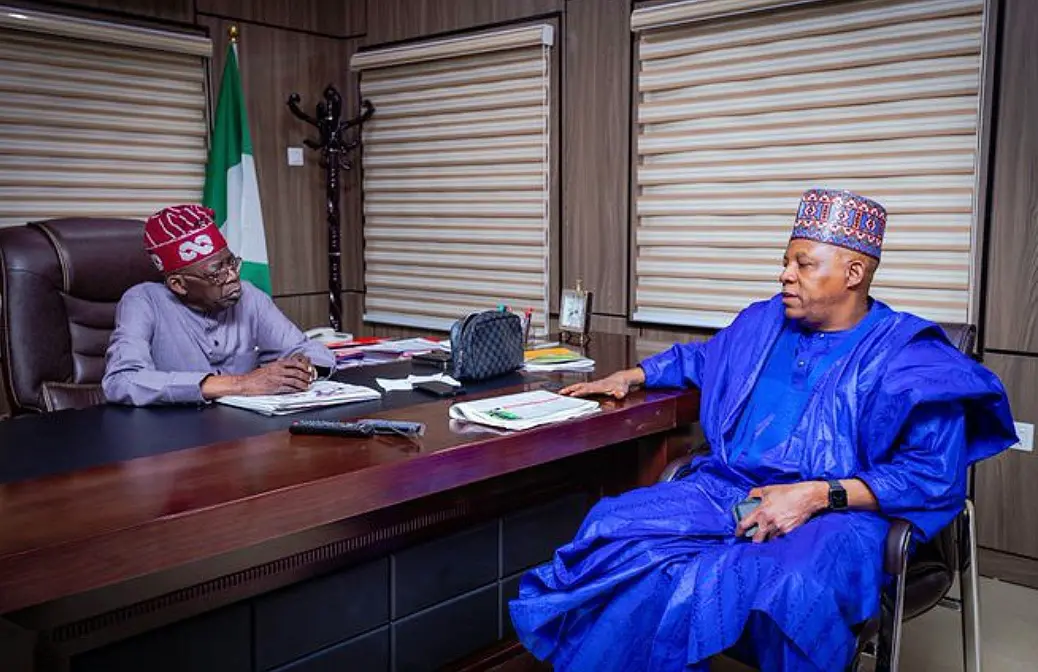
Vice President Kashim Shettima has credited President Bola Tinubu’s economic reforms with preventing Nigeria from sliding into economic collapse, saying the administration’s decisions on fuel subsidy and foreign exchange helped save the country from “falling into pieces.”
Shettima made the remarks on Saturday, October 3, 2026, while speaking with journalists after meeting Tinubu at the President’s residence in Ikoyi, Lagos. He defended the administration’s economic policies and acknowledged the hardship Nigerians have experienced since the reforms were introduced.
According to the Vice President, Nigeria’s foreign reserves were below $3.9 billion when the Tinubu administration assumed office, a situation he described as evidence that the economy was approaching a critical point. He said Tinubu demonstrated the “courage and conviction” to remove the fuel subsidy and reform the multiple exchange-rate system.
Shettima argued that the measures, although difficult, were necessary to prevent a deeper economic crisis. “The economy was actually on the verge of collapse. He saved the economy,” the Vice President said, adding that Nigeria had been heading towards a situation comparable to Venezuela before the government intervened.
The Vice President, however, acknowledged the economic difficulties facing Nigerians, saying the Federal Government was aware of the hardship and was working on measures to reduce the burden on citizens. “Tough times do not last forever; tough people do,” he said, while stressing that the government was rolling out programmes aimed at easing the pressure on households.
Shettima announced that the Federal Government would, in the coming weeks, introduce several initiatives, including an e-logistics programme in the North-West and 10,600 electric tricycles in the North-East. He also said 300 buses and e-taxis would be deployed as part of efforts to improve transportation and reduce the impact of high mobility costs on Nigerians.
The meeting in Lagos was the first public interaction between Tinubu and Shettima since the President returned from his extended stay in Europe and the Vice President returned from the 81st United Nations General Assembly in New York, where he represented Nigeria. Tinubu had earlier told Nigerians in his Independence Day address that the country was moving from economic reforms towards a period of prosperity.
Shettima’s assessment has nevertheless drawn a contrasting political response from opposition figures, who have criticised the administration over the cost of living, poverty and insecurity. The differing positions reflect the wider debate over whether the government’s economic reforms are translating into improved living conditions for Nigerians, even as the administration maintains that the reforms have stabilised the foundations of the economy.