 admin
admin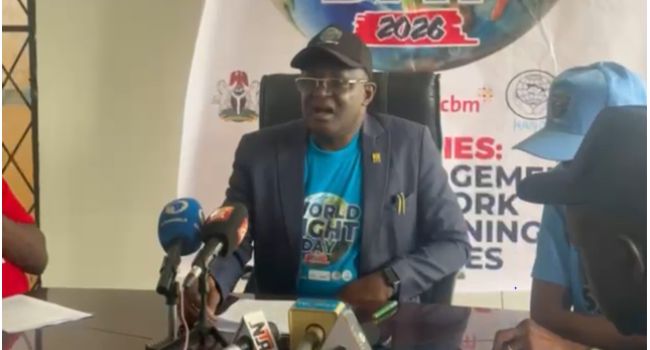
The Plateau State Government has renewed its commitment to reducing avoidable blindness and expanding access to quality eye care services across the state.
The Commissioner for Health, Dr Nicholas Ba’amlong, stated this in a message to mark the 2026 World Sight Day, being commemorated on October 8 under the theme, “Love Your Eyes.”
Ba’amlong said the theme was a powerful reminder that good vision was essential to learning, working, communicating, moving around safely and enjoying life, urging residents to take practical steps to protect their sight.
“Loving our eyes therefore means taking practical steps to protect our vision and seeking appropriate eye care whenever the need arises,” he said.
The Commissioner noted that eye health was closely connected to education, employment, productivity, independence and quality of life, stressing that untreated vision problems could have serious consequences for individuals and families.
He explained that a child who could not see the board clearly might struggle to learn, while farmers and other workers with impaired vision could face difficulties working safely.
Ba’amlong said the government, under the leadership of Governor Caleb Manasseh Mutfwang, remained committed to strengthening eye health services and making eye care increasingly accessible to residents, regardless of their location or economic circumstances.
“Our goal must be an eye health system where every person—regardless of age, gender, location or economic circumstances—has the opportunity to receive appropriate eye care,” he said.
He added that the government would continue to integrate eye health into the wider healthcare system, strengthen referral pathways, promote community awareness and encourage early detection and treatment of eye conditions.
Plateau State’s Commissioner for Health, Dr Nicholas Ba’amlong, speaking during the 2026 World Sight Day, being commemorated on October 8 under the theme, “Love Your Eyes.”
The Commissioner also stressed the need to reach people living in underserved and hard-to-reach communities, calling for a shift from isolated interventions to coordinated and sustainable eye health programmes.
He acknowledged the contributions of development partners, non-governmental organisations, health professionals, traditional and religious leaders, schools and community organisations towards improving eye health in Plateau State.
According to him, partnerships have helped expand awareness, screening, equipment, training and access to eye care services, urging stakeholders to sustain their collaboration with the state government.
Ba’amlong called on parents and caregivers to pay attention to changes in their children’s vision, while urging workers to protect their eyes from workplace hazards and seek appropriate eye examinations.
He advised older persons not to dismiss changes in vision as a normal part of ageing, but to seek professional assessment and treatment when necessary.
The Commissioner further urged community leaders, teachers and religious leaders to promote accurate information about eye health and discourage harmful practices that could put people’s vision at risk.
“Most importantly, let us not wait until a vision problem becomes severe before seeking help,” he said.
Ba’amlong commended eye health professionals and other healthcare workers for their dedication, urging them to continue providing compassionate and quality services while strengthening health education and early referral.
He said the state would also continue to embrace appropriate innovations and technologies that could help identify eye problems earlier and extend services to communities that need them most.
The Commissioner described sight as an invaluable gift and called on residents to make eye health a personal and family priority.
“Love Your Eyes. Protect Your Sight. Seek Eye Care. Encourage Others To Do The Same,” Ba’amlong urged.