 admin
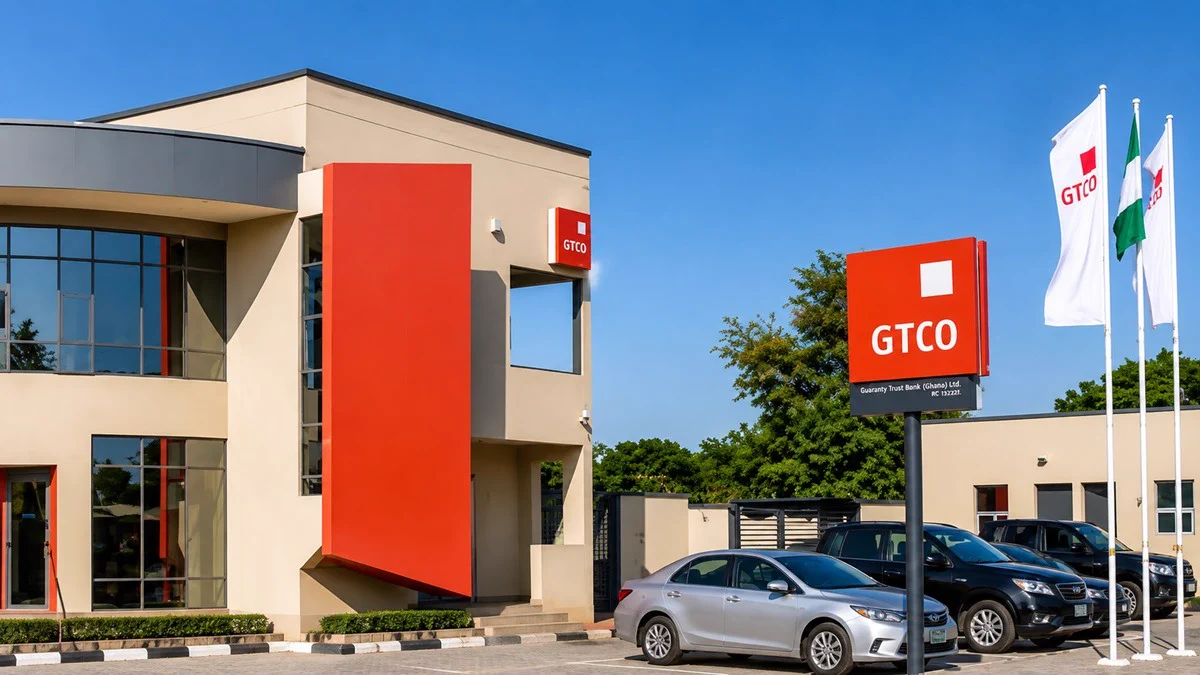
Guaranty Trust Holding Company Plc (GTCO) has reported a 12.2 per cent decline in profit after tax to ₦614.6 billion for the nine months ended September 30, 2026, as rising interest expenses, higher operating costs, increased tax liabilities and significant fair value losses weighed on its financial performance.
The Group’s unaudited financial statements showed that profit after tax dropped from ₦699.6 billion recorded in the corresponding period of 2025, while profit before tax declined by 2.3 per cent to ₦879.9 billion from ₦900.8 billion.
The decline came despite growth in some of the company’s major income streams, raising concerns about its ability to translate revenue growth into improved profitability amid mounting financial and operating costs.
One of the major pressure points in the results was the increase in operating expenses, which climbed by 9.5 per cent to ₦399.8 billion from ₦365 billion in the corresponding period of the previous year.
A breakdown of the expenses showed that depreciation and amortisation increased significantly to ₦82.46 billion from ₦58.49 billion, representing a rise of approximately 41 per cent. Other operating expenses also increased to ₦228.83 billion from ₦214.88 billion, although personnel expenses declined to ₦88.51 billion from ₦91.61 billion.
Interest expenses also rose sharply by 27.7 per cent to ₦356 billion from ₦278.73 billion, outpacing the 5 per cent growth in interest income, which increased to ₦1.29 trillion from ₦1.23 trillion.
Consequently, net interest income declined by approximately 1.7 per cent to ₦935.88 billion from ₦952.14 billion, indicating growing pressure from the cost of funding despite higher earnings from interest-generating activities.
The Group’s non-interest income also weakened, declining by 1.5 per cent to ₦368 billion from ₦373.6 billion. Although fees and commission income and trading income recorded modest growth, a significant fair value loss of ₦87.9 billion further weighed on the overall financial performance.
GTCO’s net interest margin also moderated to 11.7 per cent, reflecting pressure on the spread between interest earned and interest paid.
Another concern was the increase in the Group’s income tax expense, which rose by approximately 31.9 per cent to ₦265.32 billion from ₦201.16 billion in the corresponding period of 2025.
The higher tax burden contributed to the sharper decline in profit after tax compared with the reduction in profit before tax. GTCO attributed part of the decline in its after-tax earnings to changes in Companies Income Tax regulations affecting capital allowance reliefs.
The impact was also reflected in earnings per share, which fell by approximately 20 per cent to ₦16.58 from ₦20.71, indicating a reduction in earnings attributable to each ordinary share. The company attributed the decline partly to the increase in outstanding shares following its capital-raising exercises in 2024 and 2025.
GTCO’s lending position also recorded a contraction during the nine-month period, with its net loan book declining by 4.1 per cent to approximately ₦3 trillion from ₦3.13 trillion at the end of December 2025.
The reduction came despite an increase in deposit liabilities, which grew by 8.6 per cent to ₦13.98 trillion from ₦12.87 trillion over the same period.
Although the Group attributed the moderation in lending to its disciplined approach to risk asset creation, the decline raises questions about the pace of its credit expansion and its ability to convert growing customer deposits into increased lending activity.
The Group’s liquidity ratio also declined from 56.7 per cent at the end of 2025 to 50.1 per cent in September 2026, while its capital adequacy ratio dropped from 43.8 per cent to 34.2 per cent.
Although both indicators remain above their respective regulatory minimum requirements, their downward movements warrant attention, particularly amid rising funding costs and declining profitability.
Meanwhile, the Group recorded some improvements in asset quality. Its Stage 3 loan ratio declined to 4 per cent from 5 per cent at the end of 2025, while its cost of risk fell to 0.9 per cent from 2.2 per cent. The improvements suggest a reduction in credit risk pressures during the reporting period.
The financial results present a mixed picture of GTCO’s performance, with growth in interest income and deposits accompanied by higher operating expenses, rising funding costs, increased taxation and declining profitability.
While the Group maintains substantial capital and liquidity positions, the combination of declining profit after tax, weaker earnings per share and a shrinking loan book raises important questions about the sustainability of its earnings growth, cost management strategy and ability to improve returns to shareholders.
Investors and other stakeholders will be watching closely to see whether the Group’s management, led by its Group Chief Executive Officer, Segun Agbaje, can address the mounting cost pressures, strengthen lending activity and reverse the decline in profitability in subsequent reporting periods.