 admin
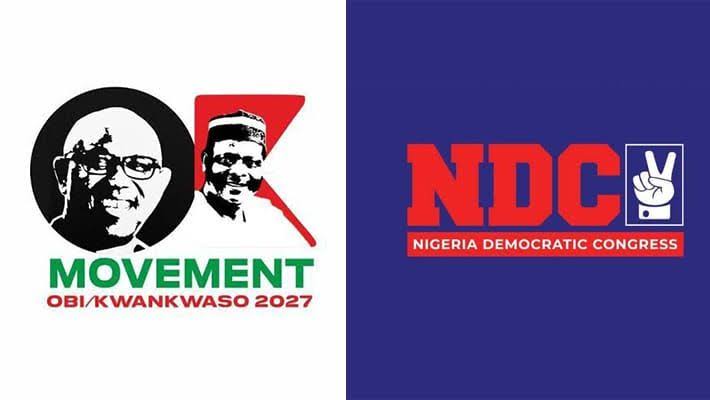
The Obi-Kwankwaso (OK) Movement has criticised the Nigeria Democratic Congress (NDC) over its newly unveiled National Campaign Council, questioning the party’s preparedness for the 2027 general elections and insisting that political success depends on grassroots mobilisation.
The movement’s Director-General, John Ughulu, made the criticism in a statement on Monday, October 26, following the NDC’s announcement of its campaign leadership a day earlier. He argued that the party had delayed putting its campaign machinery in place despite the approaching elections.
Ughulu maintained that announcing prominent political figures to campaign positions would not automatically translate into electoral success without effective coordination, strategic planning and an established network reaching voters at the grassroots.
He also claimed that the OK Movement had spent considerable time building its organisational structures, while suggesting that some individuals appointed to the NDC campaign council might eventually seek the movement’s support and mobilisation network.
“With less than three months to the general elections, they are only just announcing their Presidential Campaign Council,” Ughulu said, questioning the party’s strategy and preparations.
The NDC’s campaign council, announced on Sunday, October 25, is chaired by the party’s National Leader, Senator Henry Seriake Dickson, with its presidential candidate, Peter Obi, serving as co-chairman. National Chairman Cleopas Moses Zuwoghe was named vice-chairman, while vice-presidential candidate Rabiu Musa Kwankwaso was appointed co-vice-chairman.
Other prominent figures named to the campaign structure include former Secretary to the Government of the Federation, Babachir Lawal; former Deputy Senate President, Senator Ovie Omo-Agege; Senator Victor Umeh; and political figure Buba Galadima. Ibrahim Hussain Abdulkarim was named Director-General of the presidential campaign, while Ikenna Morgan Enekweizu was appointed council secretary.
Ughulu and the OK Movement’s state, local government and ward coordinators were not listed among the appointments highlighted in the published council report. The development has added to an existing disagreement over the movement’s independence and its relationship with the party’s official campaign organisation.
The dispute follows earlier objections by NDC leaders to the movement’s establishment of a separate campaign council. Party figures have argued that support groups should complement the party’s official structures rather than operate competing arrangements, while Ughulu maintains that the OK Movement is an independent political organisation that will retain its own network.
Insisting that the movement would not be reduced to a ceremonial support group, Ughulu said electoral campaigns required sustained organisation, committed personnel and coordination across polling units. The disagreement now presents a challenge for the NDC as it prepares for the 2027 polls and seeks to align its formal campaign leadership with the grassroots networks backing Obi and Kwankwaso.