 admin
admin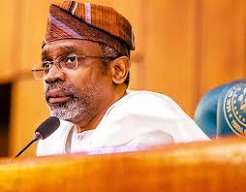
Day two of the Nigerian Bar Association’s (NBA) 2026 Annual General Conference (AGC) in Port Harcourt was dominated by robust engagement on Nigeria’s security architecture and the future of policing, as presidential candidates clashed on campaign-trail issues, while the Chief of Staff to the President, Femi Gbajabiamila, defended the administration’s push for state police reforms.
Presidential Candidates’ Panel Session
The second panel session of the day, featuring presidential candidates, proved to be the most engaging of the conference, with discussions centred on security, police reform, state policing, elections, and fuel subsidy. This contrasted with an earlier session featuring African Action Congress (AAC) candidate Omoyele Sowore, Dino Melaye, and others, where Melaye’s contributions were largely muted.
One of the defining moments of the session was an exchange between Sowore and former Rivers State Governor Rotimi Amaechi, in which Amaechi rejected Sowore’s interpretation of his remarks.
On the question of policing, most candidates on the panel expressed support for the adoption of state police, although the candidate of the Social Democratic Party (SDP), Adewole Adebayo, pushed instead for a three-tier structure encompassing federal, state, and local government policing.
On security, Sowore and the SDP candidate argued that a change in national leadership was required to address Nigeria’s security challenges, insisting that what they described as “terrorists in the Presidential villa” needed to be voted out for meaningful progress to be made. The presidential candidate of the Nigeria Democratic Congress (NDC), Peter Obi, took a different approach, emphasising poverty reduction as central to reducing insecurity in the country.
Despite the differing positions, the panel was described as lively and substantive, with a shared recognition among candidates that major police reforms remain necessary.
Plenary Session on Democracy, Governance
At a separate plenary session on democracy and governance, Sowore promised that individuals found to have stolen the nation’s resources would be brought to justice under his administration, should he be elected.
Also speaking, former Cross River State Governor Donald Duke said that getting leadership right remained the fundamental key to addressing Nigeria’s broader challenges.
“If we get the leadership right, everything else will fall into place,” he said, decrying the scourge of ethnicity in Nigerian politics and calling for collective efforts to improve the country’s presidential system of government.
Gbajabiamila On Policing in Transition
In a keynote address titled “Policing in Transition”, Gbajabiamila spoke extensively on the administration’s reforms, why they matter, and the standards by which the administration’s work should be judged.
Gbajabiamila said the President had decided to confront a truth the country had ignored for too long by proceeding with the establishment of state police.
“Centralised policing without safeguards will bring about more chaos,” he said, explaining that the reform introduces a dual policing system designed to correct existing imbalances. “Nigerians must receive equal protection in every state, regardless of ethnicity, religion, or others,” he added.
He stressed the importance of first agreeing on the specific problems the reforms are meant to solve.
“It’s important that we agree on the specific nature of the problems we’re trying to solve with these reforms,” he said, citing the problem of police reach as a key example. “Nigeria has one policeman for every 650 people, compared to the international benchmark of one policeman to every 450,” he noted, adding that the disparity becomes even more concerning “when you take note that most policemen are deployed for administrative and escort duties.”
Gbajabiamila stressed the need for proper training to prepare officers to enforce the law effectively.
“Training must prepare officers to enforce the law properly; professionalism is also very important,” he said, adding, “policing should become a respected career that every Nigerian chooses.”
Addressing the question of oversight, he asked, “Who polices the police?” He argued that “a governor elected by the people cannot be denied the right to carry out executive duties” but stressed that “a governor shouldn’t be allowed to order the arrest of a political opponent.”
He added that “an officer who refuses an unlawful command must be protected as well,” insisting that “these protections mustn’t be just by word of mouth, but by strengthened institutions.”
Gbajabiamila also addressed concerns around the potential for partisan misuse of police powers under the proposed reforms.