 admin
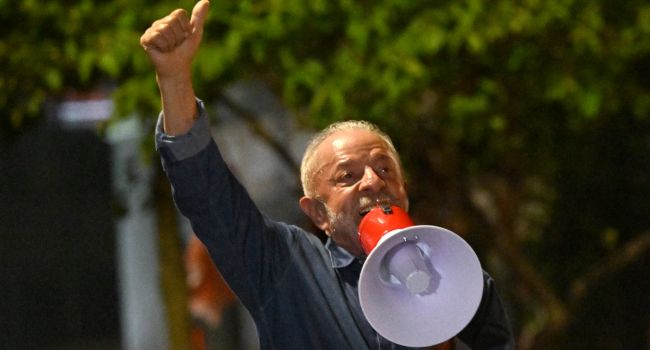
Brazilian President Luiz Inácio Lula da Silva has secured a historic fourth, non-consecutive presidential term after defeating right-wing challenger Flávio Bolsonaro in a closely contested runoff election, although his opponent has rejected the outcome and vowed to seek its annulment.
Official results released by Brazil’s Superior Electoral Court showed Lula winning 51.79 per cent of valid votes, equivalent to 64,256,232 votes, against Bolsonaro’s 48.21 per cent, or 59,826,041 votes. The margin was approximately 4.43 million votes.
Bolsonaro, a senator and son of former president Jair Bolsonaro, questioned the legitimacy of the process following a decision by a Supreme Court justice to extend voting hours by two hours in response to reported difficulties affecting voters’ access to polling stations.
He described the decision as unacceptable and said he would seek to have the election annulled. However, the announcement of an intended challenge does not itself overturn the official result, and any attempt to invalidate the election would have to go through the relevant legal process.
The extension followed concerns raised by Lula’s campaign about public transport difficulties that allegedly prevented some citizens from reaching polling stations. Bolsonaro’s campaign also requested an extension in some areas affected by heavy rainfall, according to reports. The competing requests have become a major point of dispute following the vote.
Lula’s victory represents another political comeback for the 80-year-old leader, who first became president in 2003 and won a second term in 2006 before returning to office in 2023. His latest win secures another four-year mandate beginning in 2027.
The campaign exposed deep divisions in Brazilian society, with voters weighing economic pressures, crime, social welfare, corruption concerns and the country’s position in international affairs. Lula’s campaign emphasised social protection and national sovereignty, while Bolsonaro sought to attract conservative voters and those demanding a change in leadership.
The result also comes amid a wider political shift in parts of Latin America, where right-wing candidates and parties have made gains. Lula’s re-election maintains left-wing leadership in Brazil, the region’s largest economy, at a time of competing political and diplomatic interests across the continent.
Lula’s next term will nevertheless bring significant challenges. His government will have to address concerns over living costs and public security while working with a Congress in which conservative forces hold considerable influence. The election result does not erase the divisions revealed during the campaign.
As Bolsonaro prepares to challenge the outcome, attention will turn to whether he submits a formal legal petition and what grounds he presents. For now, Brazil’s electoral authority has declared Lula the winner, giving him a fresh mandate despite the opposition’s objections.
AFP