 admin
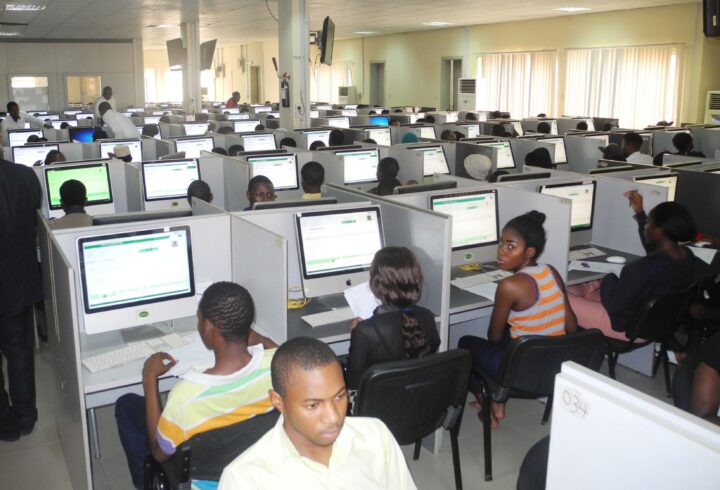
The pro-chancellor of Miva Open University, Dr Tunji Olowolafe, has emphasised the importance of online learning in breaking barriers to university education, as the institution matriculated 12,260 new students for the 2026 academic session.
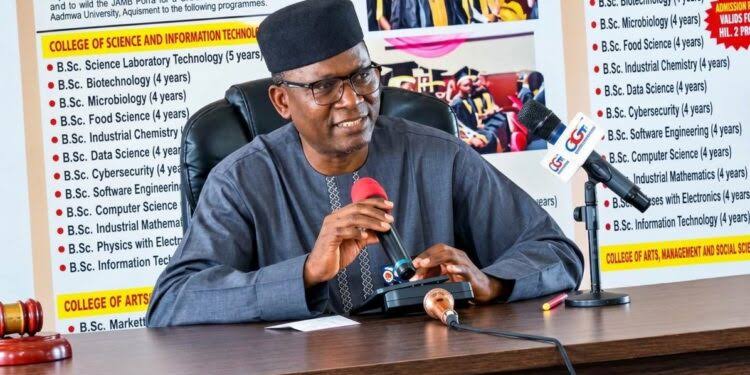
Olowolafe stated this at the university’s 2026 matriculation held at the Transcorp Centre, Maitama, Abuja, where he urged the new students to embrace lifelong learning and remain committed to completing their programmes.
He said the traditional university system had forced many Nigerians to choose between pursuing higher education and meeting their professional and family obligations, thereby denying the country access to the talents of many capable individuals.
“For generations, higher education in Nigeria demanded a heavy sacrifice: you had to put your life on hold,” he said, noting that Miva’s flexible learning model allowed students to combine academic pursuits with work, business and other responsibilities.
According to him, the model reflects the changing demands of a world where continuous learning has become essential for professional growth and career advancement.
“The old pattern of studying for a few years and relying on that single degree for the rest of your career is over. The world moves too fast and continuous learning is now a lifelong requirement,” he said.
Olowolafe encouraged the matriculants to leverage their professional and personal experiences in their studies, explaining that practical knowledge acquired from workplaces, businesses and communities could enrich academic discussions and help them solve real-life problems.
The Pro-Chancellor also cautioned students to prepare for internet connectivity challenges, joking that their first major examination might come from their internet service providers rather than their professors.
Meanwhile, the university’s Chancellor, Sim Shagaya, disclosed that Miva had enrolled more than 40,000 students since it commenced operations in 2023, describing its growth as evidence of the potential of technology to transform access to higher education.
Shagaya said the university was working towards establishing study centres in every local government area in Nigeria, alongside developing state-of-the-art robotics and drone laboratories and a world-class research institution.
He said the target of reaching one million African learners over the next decade was not merely a slogan but a commitment to expanding access to quality education without compromising academic standards.
“Our ambition is to impact one million Africans over the next decade, and it is not just a slogan; it is a commitment,” he said.
The Chancellor said the institution had grown from an initial enrolment of about 500 students to more than 40,000, adding that it was established to address barriers preventing capable Nigerians and other Africans from accessing quality education.
He urged the students to embrace discipline, consistency, curiosity and hard work, stressing that academic success depended on sustained effort rather than talent alone.
In his address, the Vice-Chancellor of Miva Open University, Professor Tayo Arulogun, reaffirmed the institution’s commitment to expanding access to quality higher education through flexible, technology-driven learning.
He said the university was focused on equipping students with the knowledge, practical skills and competencies required to thrive in an increasingly competitive global economy.
Arulogun noted that Miva’s growing student population reflected increasing demand for alternative pathways to university education, particularly among Nigerians seeking to combine academic pursuits with work, business and family responsibilities.
He urged the newly matriculated students to take their studies seriously, remain disciplined and make effective use of the learning resources available to them.
Also speaking, the Assistant Director-General of the World Health Organisation, Dr Chikwe Ihekweazu, urged the students to use education to challenge injustice, demand accountability and create opportunities for others, warning against pursuing academic qualifications solely for personal success.
He also cautioned them against abusing artificial intelligence to obtain academic qualifications without acquiring the knowledge and skills their education was intended to provide.
He warned, however, that students had to choose between using the technology to deepen their understanding and relying on it to avoid learning.
“If you use AI to deceive your assessors to pass rather than to learn, you may actually get the grades. You may even get the degree, but you will have denied yourself something far more valuable: the education that you actually came to seek,” he said.